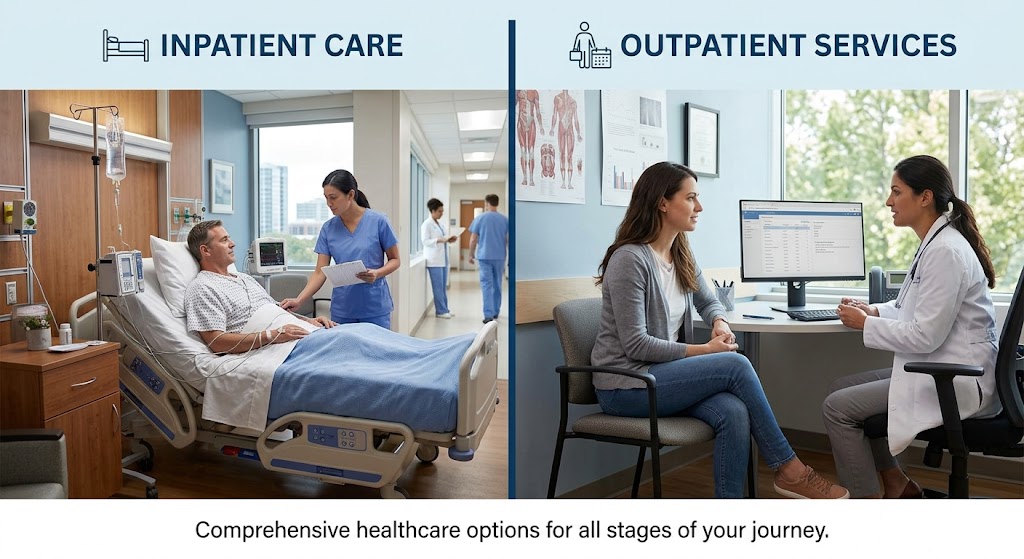
 Choosing a treatment path for alcohol and drug abuse can feel overwhelming, especially when you are already dealing with the emotional and physical weight of addiction. One of the most common questions individuals and families ask is whether inpatient or outpatient care is the better option. The answer depends on your unique situation, including the severity of substance use, mental health needs, and level of support at home. Understanding the differences between these two approaches can help you make a confident and informed decision that supports long term recovery.
Understanding Inpatient Treatment
Inpatient treatment, also known as residential care, provides a structured and supportive environment where individuals live at the treatment facility during their recovery program. This approach allows people to step away from daily stressors and focus entirely on healing.
What Inpatient Care Offers
- 24 hour supervision and professional support
- Access to medical care and detox services when needed
- Daily therapy sessions, including individual and group counseling
- A stable routine that promotes accountability and progress
Inpatient care is designed to create a safe space where individuals can begin recovery without the distractions or triggers of everyday life.
Who May Benefit Most From Inpatient Treatment
Inpatient programs are often recommended for individuals who:
- Have a severe or long standing substance use disorder
- Experience strong cravings or withdrawal symptoms
- Have co occurring mental health conditions such as anxiety, depression, or trauma
- Have experienced relapse after previous treatment attempts
- Do not have a stable or supportive home environment
Understanding Outpatient Treatment
Outpatient treatment provides a flexible alternative that allows individuals to receive care while continuing to live at home. This option is often suitable for those who need structured support but also have responsibilities they cannot step away from completely.
What Outpatient Care Offers
- Scheduled therapy sessions and support groups
- Access to mental health counseling and addiction treatment services
- Flexible scheduling to accommodate work, school, or family commitments
- Opportunities to apply recovery strategies in real world situations
Outpatient care encourages independence while still providing professional guidance and support.
Who May Benefit Most From Outpatient Treatment
Outpatient programs may be a good fit for individuals who:
- Have mild to moderate substance use concerns
- Have completed inpatient treatment and need ongoing support
- Have a strong support system at home
- Are motivated to stay engaged in recovery while managing daily responsibilities
Key Differences Between Inpatient and Outpatient Care
Understanding the core differences can help clarify which option aligns with your needs.
Level of Structure and Support
Inpatient treatment offers a highly structured environment with continuous support. Outpatient care provides more flexibility but requires individuals to take greater responsibility for managing their recovery.
Exposure to Triggers
Inpatient care removes individuals from environments that may trigger substance use. Outpatient care allows individuals to remain in their daily environment, which can help build coping skills but may also present challenges.
Intensity of Treatment
Inpatient programs typically provide more intensive therapy and monitoring. Outpatient programs offer consistent care, but at a lower level of intensity.
The Importance of Mental Health in Treatment Decisions
Mental health plays a critical role in alcohol and drug abuse recovery. Many individuals face co occurring conditions that require integrated care. Treatment programs that combine mental health services with addiction recovery support provide a more comprehensive and effective approach.
Whether inpatient or outpatient, choosing a program that addresses both mental health and substance use increases the likelihood of long term success.
The Role of Holistic and Faith Based Care
Recovery is most effective when it supports the whole person. Holistic approaches such as mindfulness, nutrition, physical activity, and stress management promote overall well being. Faith based support can provide additional comfort, meaning, and connection for those who value spiritual growth.
Individualized treatment plans often incorporate these elements to create a balanced and personalized recovery experience.
Making the Right Choice for Your Recovery
Choosing between inpatient and outpatient treatment is not about finding a perfect answer. It is about selecting the option that best meets your current needs and supports your long term goals. In many cases, individuals begin with inpatient care and transition to outpatient programs as they build stability and confidence.
A professional assessment can provide valuable insight and help guide your decision. Treatment providers can evaluate your situation and recommend a plan that aligns with your physical, emotional, and mental health needs.
Taking the First Step Toward Healing
Recovery from alcohol and drug abuse is possible with the right support and guidance. Whether you choose inpatient or outpatient care, what matters most is taking that first step toward help. Compassionate, client centered treatment programs offer the tools, structure, and encouragement needed to build a healthier and more fulfilling life.
If you or a loved one is struggling with alcohol and drug abuse, do not wait to seek support. Reach out to a trusted treatment provider today to explore your options and begin your journey toward lasting recovery.