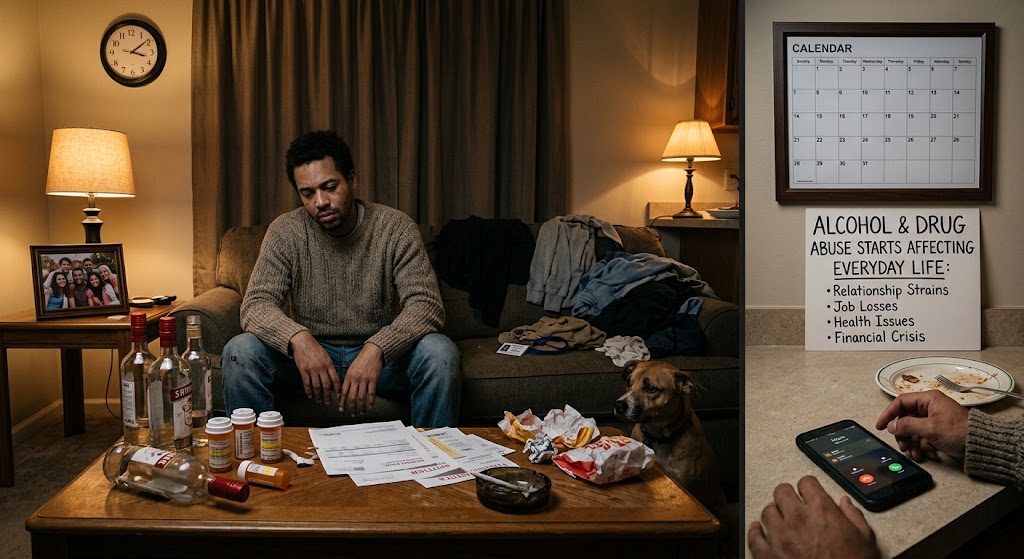
 Alcohol and drug abuse does not always begin with an obvious crisis. Sometimes, the changes happen slowly. A person may start drinking more frequently, using drugs to cope with stress, missing responsibilities, withdrawing from loved ones, or relying on substances just to feel normal. Because these changes can develop gradually, it may be difficult to recognize when casual or occasional use has become a serious concern. Knowing the warning signs can make it easier to seek alcohol and drug abuse treatment before the consequences become even more difficult to manage.
As substance use begins affecting everyday life, the issue is no longer simply about how much someone drinks or what substances they use. It is also about what those substances are doing to a person’s relationships, mental health, responsibilities, physical well being, and ability to live according to their values.
When Substance Use Begins Changing Daily Life
One of the clearest signs of a developing substance use problem is a noticeable change in everyday functioning.
Someone may continue going to work or school and appear to be managing life reasonably well. However, behind the scenes, alcohol or drug use may be taking increasing amounts of time, energy, attention, and emotional space.
Responsibilities Start Falling Through the Cracks
Missing work, arriving late, neglecting household responsibilities, falling behind academically, or repeatedly failing to follow through on commitments can indicate that substance use is interfering with normal life.
Occasional mistakes happen to everyone. The concern becomes greater when these problems happen repeatedly and appear connected to drinking or drug use.
Relationships Begin to Suffer
Addiction can gradually affect communication and trust. A person may become secretive about their substance use, cancel plans, isolate themselves, or become increasingly defensive when loved ones express concern.
Family members may also notice changes in personality or behavior. Arguments can become more frequent, and relationships that once provided stability may become strained.
These changes should not automatically be interpreted as a lack of care. Substance use can influence how people respond to stress, conflict, and emotional discomfort. Professional treatment can help address these patterns without reducing the person to their addiction.
Emotional Changes Can Be Important Warning Signs
Alcohol and drug abuse can affect much more than physical health. Emotional and psychological changes may be among the earliest signs that someone needs additional support.
Increased Anxiety, Irritability, or Mood Changes
A person who regularly uses substances may experience significant changes in mood. They may become unusually anxious, irritable, restless, withdrawn, or emotionally unpredictable.
Some people use alcohol or drugs because they are already struggling with difficult emotions. Others develop mental health challenges as substance use continues. In either situation, the relationship between addiction and mental health deserves careful attention.
Using Substances to Cope With Emotions
One important question is not simply, “How often do I use?”
Consider asking, “What happens when I feel stressed, sad, angry, lonely, or overwhelmed?”
If alcohol or drugs have become the primary way to manage difficult emotions, it may be time to consider professional support.
Healthy coping skills can take many forms. Counseling, meaningful relationships, exercise, spiritual practices, creative activities, mindfulness, and healthy routines can all become part of a broader recovery plan.
Tolerance, Cravings, and Loss of Control
Changes in the way a person experiences substances can also provide important clues.
Needing More to Get the Same Effect
Developing tolerance can mean that someone needs more of a substance to experience an effect they previously achieved with less. This can increase the risks associated with substance use and may make stopping more difficult.
Strong Cravings Become Part of the Day
Cravings can create a powerful mental focus on obtaining or using a substance. Someone may spend considerable time thinking about when they can drink or use again.
When cravings begin interfering with work, relationships, sleep, or other priorities, professional assessment can provide an opportunity to understand what is happening and identify appropriate treatment options.
Attempts to Cut Back Keep Failing
A person may genuinely want to reduce or stop their substance use but repeatedly find themselves returning to the same pattern.
This does not mean they lack character or determination. Addiction can involve powerful physical, psychological, and behavioral factors. Professional alcohol and drug abuse treatment can provide structure, guidance, and strategies that are difficult to develop alone.
Why Mental Health Treatment Matters
Treating substance use without considering mental health can leave important issues unresolved.
Addiction and Mental Health Can Be Connected
Depression, anxiety, trauma, grief, and other emotional concerns can influence substance use. At the same time, prolonged substance use can contribute to worsening emotional and psychological difficulties.
When both concerns are present, individualized treatment can address them together.
A comprehensive recovery approach may help individuals understand their triggers, process difficult experiences, develop healthier coping mechanisms, and recognize patterns that previously contributed to substance use.
Choosing the Right Level of Addiction Treatment
There is no single treatment setting that works for everyone. The appropriate level of care depends on factors such as substance use, physical and emotional needs, home environment, support system, and recovery goals.
Inpatient Care
Inpatient treatment can provide a structured environment for individuals who need more intensive support. Being away from everyday triggers may allow someone to focus more fully on recovery and begin establishing healthier routines.
For people with significant substance use concerns, professional assessment is especially important before attempting to stop certain substances suddenly. Some forms of withdrawal can be medically serious and may require appropriate supervision.
Outpatient Care
Outpatient treatment allows individuals to receive ongoing professional support while living at home when that level of care is appropriate.
This approach can help people apply recovery skills to everyday situations. They may work on managing cravings, handling stressful relationships, maintaining routines, and creating a support network while continuing important responsibilities.
How Holistic and Individualized Care Supports Recovery
Effective recovery involves more than addressing substance use. It also involves rebuilding the parts of life that addiction may have disrupted.
Caring for the Whole Person
A holistic approach may consider physical health, emotional well being, relationships, personal values, and spiritual needs.
Healthy sleep, nutrition, movement, stress management, meaningful activities, and supportive relationships can all contribute to a stronger foundation for recovery.
These elements work alongside professional addiction and mental health treatment rather than replacing it.
Making Recovery Personal
Individualized care recognizes that every person arrives at treatment with a different history and different goals.
Some individuals may benefit from a structured inpatient setting. Others may be appropriate for outpatient care. Some may place significant importance on faith and spirituality, while others may prefer different approaches to personal growth.
The goal is to build treatment around the person and their needs rather than forcing every individual into the same recovery model.
What You Can Do If You Recognize These Signs
Recognizing a problem is an important first step. You do not have to wait until everything falls apart before asking for help.
If you are concerned about your own alcohol or drug use, consider taking these practical steps:
Be Honest About What Is Happening
Look beyond promises or intentions and consider what substance use is actually doing to your life. Has it affected your relationships, responsibilities, finances, health, mood, or sense of control?
Talk With a Professional
An addiction treatment professional can help you understand your situation without judgment and discuss potential treatment options.
Accept Support From Trusted People
You may not need to explain everything to everyone. Start with someone you trust and allow them to support you as you explore your options.
Focus on the Next Step
Recovery can feel overwhelming when you think about changing everything at once. Instead, focus on the next healthy decision. Making an appointment, asking questions about treatment, or speaking honestly with someone you trust can be a meaningful beginning.
It Is Never Too Early to Ask for Help
Alcohol and drug abuse can gradually become part of everyday life, making unhealthy patterns feel normal. However, noticing changes in your behavior, relationships, emotional health, or ability to manage responsibilities can provide an important opportunity to intervene.
You do not have to wait for a major crisis to take your concerns seriously.
Professional alcohol and drug abuse treatment can provide the support needed to understand substance use, address mental health concerns, develop healthier coping skills, and begin rebuilding daily life. Inpatient and outpatient options can provide different levels of structure, while holistic, faith based, and individualized approaches can help make treatment more personally meaningful.
Take the Next Step Toward Recovery
If alcohol or drugs are beginning to control parts of your life that once mattered to you, consider reaching out for professional help. Asking for support is not an admission of failure. It is a practical decision to protect your health, relationships, and future.
The earlier you recognize the signs and seek appropriate support, the sooner you can begin creating a life that is not organized around substance use. Recovery starts with one honest step, and that step can begin today.